
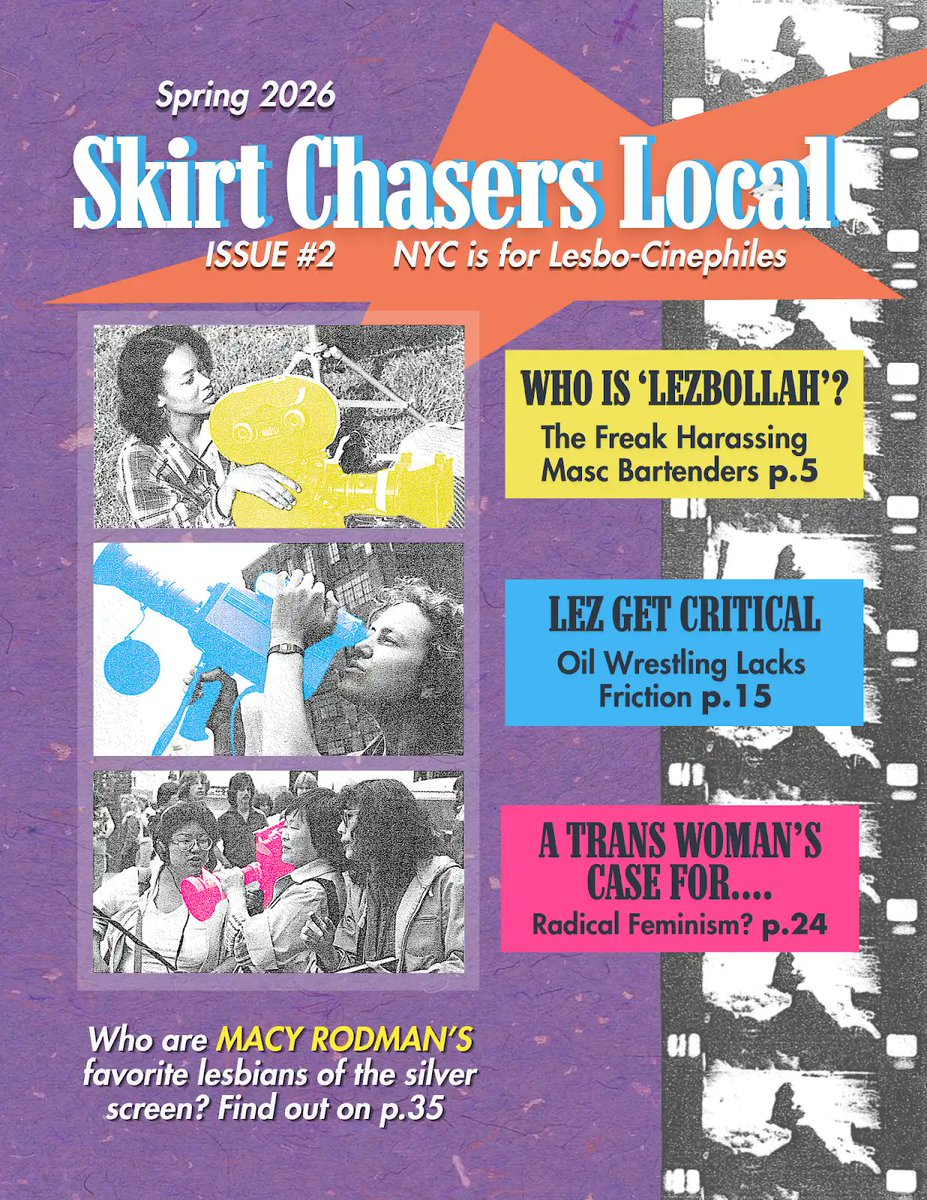
Indie mag for curious and critical lesbian cosmopolitans
WHO IS A SKIRT CHASER?
THE SKIRT CHASER is a woman of today. She’s interested in art, history, science, culture, music and literature. She is a feminist, anti-capitalist, trans or trans-evangelizing, and anti-zionist.
Skirt Chasers Local is her bible. A guide to NYC arts and culture for lesbians and feminists.
READ OUR MAGAZINE
We provide a lesbian perspective on arts and culture.
ORDER HERE
WE ARE PRINT ONLY
WE HOST A MONTHLY LESBIAN MIX-HER
Every 2nd Friday at Ridgewood Commons

COME HANG OUT WITH COOL LESBIANS.
THE GAY SHAME PARADE FILM FESTIVAL
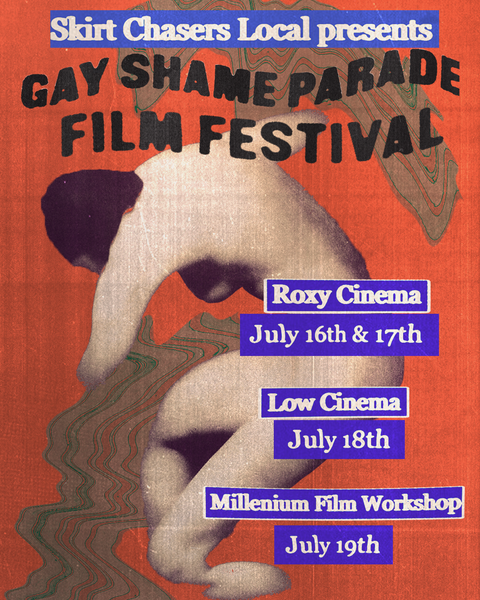
SCREENING SCHEDULE
Pride is over. July is Gay Shame Month, and Skirt Chasers Local is hosting.
What are we supposed to do with the skeletons in our closets? You know them—the self-hating homosexuals, the loathsome creatures who bring it on themselves. The ones we're embarrassed by, who give us a bad reputation?
In anticipation of Skirt Chasers Local Issue #3: Gay Shame Month, this film festival features a selection of films our team believes deserve attention and reverence, yet fit uncomfortably within "Pride" as the only acceptable flavor of expression.
Skirt Chasers Local is a lesbian and feminist arts and culture magazine based in Brooklyn and Queens. Issue Three is centered on opinions, stories, and reviews that don't fit comfortably within the concept of "Pride."
Section One at Roxy Cinema: Classics of Gay Shame
These are foundational films in the "gay shame genre." As homosexuality became acceptable to name in English-language films, these two works present the spectacle of homosexual shame, concealment, and repression (perhaps as an attempt to gain sympathy for homosexuals and their plight.)
Victim (1961, Basil Dearden) is cited as the first English-language film to use the term "homosexual." It stars the closeted Dirk Bogarde as a successful barrister blackmailed with knowledge of a former gay relationship.
The Boys in the Band (1970, William Friedkin) follows a homosexual enclave gathering for a birthday party on the Upper East Side, which explodes into a cathartic, drunken spiral of finger-pointing and collective shame.
Section Two at Low Cinema: Wildcards
Desperate Living (1977, John Waters) features the gay shame location Mortville, a shantytown dumping ground for social outcasts and perverts ruled by the evil, shame-inducing Queen Carlotta. After killing her husband, Peggy and Grizelda flee to Mortville, where they shack up with the deranged lesbian couple Mole McHenry and Muffy St. Jacques, the "most beautiful woman in Mortville."
Dottie Gets Spanked (1993, Todd Haynes) was suggested for the festival by Todd Haynes. A shy young boy becomes fixated on an I Love Lucy-type television show called Dottie Gets Spanked. His love of the program signals an interest in the domestic sphere, causing him to be chastised by his father and ostracized by his peers. His fascination with the show becomes a form of early sexual acknowledgment and expression.
(Dottie Gets Spanked will be followed by a wildcard secret short film, which will be introduced on the night of its screening.)
Section Three at Millennium Film Workshop
This program features Fireworks, Lot in Sodom, and Damned If You Don't. This trio of experimental short films centers "dissatisfied dreamers" (as Kenneth Anger describes the protagonist of Fireworks) who fear eternal damnation for expressing their sexual desires.
Fireworks (1947) portrays a sailor whose desires literally explode into a violent cascade. In Lot in Sodom (1933), Lot resists the temptations of homosexuality and sin in Sodom and Gomorrah. In Damned If You Don't (1987), a Catholic nun grapples with her repressed desire for a young woman. These three films will be screened in succession.
